5 Signs Your Production Line Needs an Upgrade, Not Replacement
A growing number of production stoppages does not always mean that a new machine is necessary. Discover five signs that modernising your production line may be a better option than replacing it.
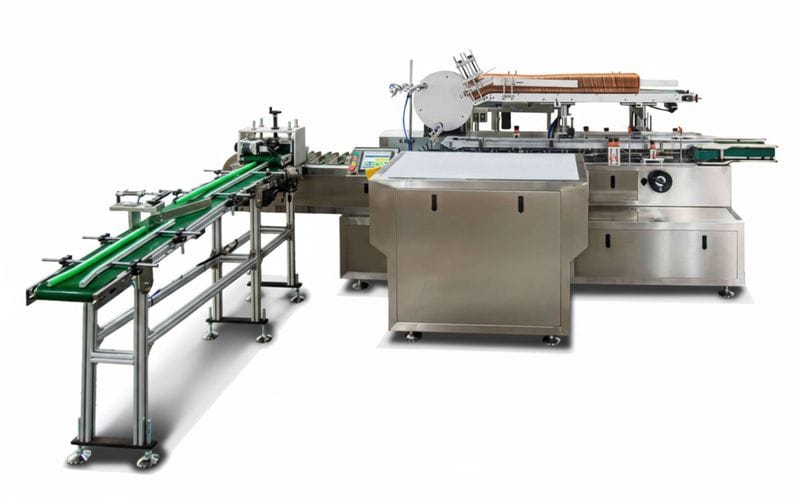
A machine’s age alone does not determine whether it is still fit for purpose. In many factories, equipment that has been in service for well over a decade still has a rigid frame, sound mechanical components and adequate accuracy. The problems lie elsewhere: in the controls, drives, safeguards or lack of process data.
The decision to upgrade or replace equipment should be based on its failure history, spare parts availability, process measurements and a risk assessment. The following signs suggest that replacing the entire line may be premature.
1. The mechanics are sound, but short stoppages are becoming more frequent
A single breakdown tells you little about a machine’s overall condition. What matters is the trend:
- Number of stoppages per shift.
- Time spent troubleshooting and repairing faults.
- Frequency of controller resets.
- Number of product jams.
- Time needed to restart production.
- Scrap generated during startup.
If the frame, guideways, gearboxes and main mechanical assemblies are in good condition, and most stoppages are caused by sensors, actuators or control faults, replacing the entire machine is usually difficult to justify.
In this situation, an upgrade could include:
- Replacing sensors and pneumatic components.
- Reworking the electrical installation.
- Replacing the PLC and HMI.
- Improving alarm diagnostics.
- Adding current, temperature or vibration monitoring.
- Logging the causes of stoppages.
The decision should be supported by at least several weeks of operating data. Availability, quality, performance and downtime are among the standard manufacturing metrics covered by the ISO 22400 series.
Simply logging alarms is not enough. A “machine fault” message gives the maintenance team little to work with. An alarm should identify the affected zone and device, the condition that triggered the stop, and the status of the signals needed to diagnose the fault.
Condition monitoring can provide further insight. Measurements of vibration, temperature, motor current and oil condition can reveal developing faults before they stop the machine. The use of these techniques in maintenance is discussed by the US National Institute of Standards and Technology.
2. Automation components are obsolete or difficult to source
The mechanical parts of a machine may have many years of service left, even after the manufacturer has stopped supporting its automation system. Typical warning signs include:
- New input/output modules are no longer available.
- Replacement components can only be sourced on the second-hand market.
- Drives or operator panels have long delivery lead times.
- The software and cables needed for diagnostics are unavailable.
- The controller program is stored on a single computer.
- There is no up-to-date backup of the PLC program or drive parameters.
- Servicing depends on one person who knows the legacy system.
The greatest risk is not the failure itself. It is being unable to get the machine running again quickly after a PLC CPU, HMI or variable frequency drive fails.
Before making a decision, carry out an audit of the automation system. This should include:
- An inventory of installed devices and software versions.
- The availability and lifecycle status of each component.
- Details of suitable replacements.
- Backups of programs and parameter settings.
- An assessment of the existing documentation.
- An estimate of the time needed to restore operation after a critical component fails.
Migrating to a new control system does not have to mean rebuilding the entire machine at the same time. Sound mechanical assemblies can be retained while the PLC, HMI, control cabinet components and selected drives are replaced. Automation manufacturers also use this approach to reduce the risks associated with ageing components and spare parts shortages. Siemens describes one such migration process.
Successful commissioning depends on thorough preparation: a documented operating sequence, an I/O list, a program backup, a test plan and a safe way to revert to the previous configuration.
3. The machine cannot keep up with production, even though its core process is fast enough
A common mistake is to judge capacity by rated speed alone. A machine may complete its cycle within the required time and still restrict the output of the entire line because of:
- Manual product loading or unloading.
- Insufficient buffering between stations.
- Long changeover times.
- Unreliable conveying.
- The entire line stopping when one section fills up.
- Poor material flow control.
- Slow quality inspection or packaging.
The first step is to locate the actual bottleneck. Measurements should cover cycle times, minor stoppages, buffer levels, changeover times and rejects. Only then can you establish whether the constraint lies in the process equipment, conveying system, operator workload or production organisation.
If the core process meets the product’s quality requirements, possible improvements include:
- Automatic loading and unloading.
- Conveyor modifications.
- Additional buffering.
- Dividing the line into independently controlled zones.
- Drive synchronisation.
- Automatic speed control.
- Stored product recipes.
- Integration of packaging and palletising.
The line needs to be assessed as a complete system. Increasing the speed of one machine will not improve overall output if the next station continues to cause stoppages. For this reason, ISO 22400 places manufacturing metrics in the context of operations management, rather than focusing solely on individual machines.
4. Safe operation depends on the operator’s experience
If operators have to know where not to put their hands, when to step away from the machine or which sensor must never be bypassed, the machine’s safety systems need to be reviewed.
Common deficiencies include:
- Movable guards without position monitoring.
- The machine being able to start while access to a hazardous area is open.
- Faulty or poorly positioned emergency stop devices.
- No means of isolating electrical, pneumatic or hydraulic energy.
- Automatic restart when power is restored.
- Access to moving parts during cleaning.
- Safeguards routinely bypassed because they make the machine difficult to operate.
- No updated risk assessment following previous modifications.
In Poland, the regulation on minimum requirements for the use of machinery requires, among other things, suitable control systems, means of stopping machinery safely, protection against access to danger zones and means of isolating energy sources. Poland’s Office of Technical Inspection (UDT) explains that the employer is responsible for ensuring safe operation in its guidance on assessing machinery against minimum occupational health and safety requirements.
A safety upgrade may include new guards, guard locking devices, light curtains, a safety PLC, standstill monitoring and safe energy isolation procedures. Its scope should not be determined solely by a list of missing components. The starting point is a risk assessment covering production, changeovers, cleaning, jam clearance and maintenance.
It is also necessary to assess whether the modifications change the machine’s function or risk level. The European Commission explains that the current Machinery Directive also applies to existing equipment modified so extensively that it effectively becomes new machinery. Further guidance is available on the Commission’s machinery legislation page.
Regulation (EU) 2023/1230 will apply from 20 January 2027. It introduces a definition of “substantial modification”. A party carrying out a modification that meets this definition will be treated as the manufacturer of the modified machinery. Conformity assessment therefore needs to be considered during project planning, rather than after the work is complete.
5. The machine uses excessive energy and needs constant manual adjustment
Older drive systems often run at a fixed speed, with the process controlled by a damper, valve, mechanical clutch or repeated motor switching. This arrangement can waste energy and make it difficult to maintain stable process conditions.
Before an upgrade, measure:
- Power demand under different operating conditions.
- The proportion of time spent idling.
- Motor loading.
- Number of motor starts.
- Motor, drive and gearbox temperatures.
- Fluctuations in speed, pressure or flow.
- Compressed air consumption.
- Running hours of auxiliary equipment.
Where process demand varies over time, variable speed control can reduce energy consumption and improve process control. However, it is not suitable for every drive application. A variable frequency drive must be selected to suit the load characteristics, operating speed range, motor cooling requirements and required dynamic response.
The US Department of Energy identifies variable speed control as a key measure for improving motor system efficiency. It also stresses the need to assess the whole system rather than simply replace the motor. Further details are provided in Improving Motor and Drive System Performance.
An upgrade may also include automatic shutdown of auxiliary equipment, stored parameter recipes, load monitoring, detection of operation without product present, and energy metering for individual production orders.
When does an upgrade make sense?
An upgrade is worth considering when:
- The structure and main mechanical assemblies have sufficient remaining service life.
- The manufacturing process still meets the product’s requirements.
- The sources of production losses have been identified.
- New components can be integrated safely.
- The documentation can be reconstructed.
- The planned service life after the upgrade justifies the investment.
- The work can be completed during a planned shutdown.
The cost assessment should cover more than the purchase price of the equipment. It also needs to include engineering, programming, documentation, testing, risk assessment, operator training, spare parts stock and the cost of lost production during the shutdown.
When is replacing the entire machine the better option?
Replacement is easier to justify when the structure is worn or corroded, the machine cannot achieve the required accuracy, it cannot be upgraded safely, or changes to the product and process have made the existing technology unsuitable.
An upgrade is also difficult to justify if it requires replacing almost every major assembly. In that case, retaining the old frame offers little financial benefit while making the project and subsequent maintenance more complicated.
Assess the equipment before setting the budget
A thorough assessment should answer four questions:
- What is actually limiting availability and production output?
- Which components still have sufficient remaining service life?
- What technical and legal risks will the modifications introduce?
- How many years of safe operation will the upgrade provide?
For an initial assessment, you need the failure history, production data, electrical documentation, a parts list and an inspection of the machine while it is running. This provides the basis for comparing three options: continuing to operate the existing equipment, upgrading it or buying a new machine.