Directive 2006/42/EC (Machinery Directive)
A comprehensive overview of Directive 2006/42/EC: definition of machinery, essential health and safety requirements (EHSR), conformity assessment procedures, the EC Declaration of Conformity, and CE marking for manufacturers and production line integrators.
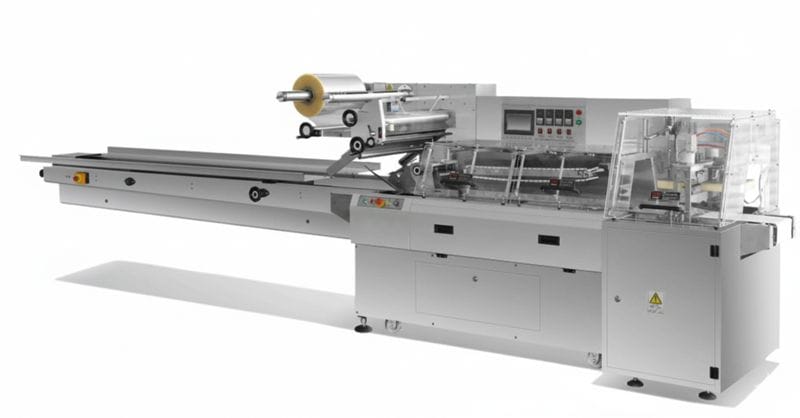
1. Context and Purpose of the Directive
Directive 2006/42/EC of the European Parliament and of the Council of May 17, 2006, concerns machinery and amends Directive 95/16/EC (recast). Its purpose is, on the one hand, to ensure the free movement of machinery within the EU single market and, on the other hand, to ensure a high level of health and safety protection for users (workers and consumers).
The Directive defines the so-called Essential Health and Safety Requirements (EHSR), which must be met in order for a machine to be CE-marked and legally placed on the market or put into service within the EU. This is a classic “New Approach” directive, in which the directive sets out the essential requirements, while the specific technical solutions are defined in harmonized standards (EN).
2. Scope of Application and Exclusions
2.1. Scope of the Subject Matter
This Directive applies to:
- machines,
- interchangeable equipment,
- safety features,
- lifting accessories,
- chains, ropes, and belts,
- removable mechanical power transmission devices,
- partly completed machinery
The definition of “machine” includes assemblies of components joined together to perform a specific application, equipped with or intended to be equipped with a power source other than direct human or animal power; at least one component must be movable.
2.2. Exclusions
The directive excludes, among other things:
- safety components intended as replacement parts, supplied by the original equipment manufacturer,
- a number of product categories for which other, more specific EU acts exist (e.g., medical devices, certain types of vehicles).
Furthermore, where specific hazards associated with machinery are wholly or partially covered by other sector-specific directives, the Machinery Directive does not apply to them or ceases to apply as of the date of implementation of those other directives.
3. Relationship to the new regulations—Regulation 2023/1230
Directive 2006/42/EC has been formally replaced by Regulation (EU) 2023/1230 on machinery, which will apply as of January 20, 2027. Until then, the directive remains a key piece of legislation in the area of machinery safety and is transposed into the national laws of the Member States.gov+2
As a directly applicable regulation, it is intended to simplify and harmonize requirements in the future and to introduce provisions concerning, among other things, software, AI-based control systems, and cybersecurity (which are important for digital projects).
4. Obligations of Manufacturers, Importers, and Users
4.1. Manufacturer (including entities that design and build machinery)
The machine manufacturer must ensure that its product meets the essential health and safety requirements set forth in Annex I of the Directive. Key obligations include:
- conducting a risk assessment and incorporating its results into the design and construction of the machine,
- ensuring compliance with the relevant harmonized standards (if applicable),
- preparation of technical documentation (Annex VII),
- conducting the conformity assessment procedure (Article 12),
- issuance of an EC Declaration of Conformity (Annex II),
- Affixing the CE marking to the machine (Annex III).
Conformity assessment procedures vary depending on the category of machinery—some require an EC type examination or full quality assurance by a notified body (Annexes IX and X).
4.2. Importer, distributor
An entity placing a machine on the EU market as an importer or distributor must, in practice, ensure that the machine bears the correct CE marking, is accompanied by a declaration of conformity, and includes instructions in the language of the country of placement. Although the directive explicitly focuses on the manufacturer and the “authorized person,” within the technical harmonization system, the obligations of the importer/distributor stem from other legal acts (e.g., horizontal regulations) and market surveillance practices.
4.3. User / Employer
The directive is formally addressed to the member states, but indirectly imposes an obligation on users (companies) to use machinery that complies with the requirements and to operate it in accordance with the instructions. In the area of occupational safety and health, it is often supplemented by Framework Directive 89/391/EEC and national occupational safety regulations.
The employer should ensure:
- selection of machines that comply with the directive and are properly marked,
- proper training of operators,
- Maintaining machinery in accordance with the manufacturer's instructions (maintenance, inspections, upgrades).gov+1
5. Essential Safety Requirements (Annex I)
Annex I sets out a comprehensive list of safety requirements for the design and construction of machinery, covering, among other things, stability, protection against moving parts, and risks related to mechanical, electrical, and chemical hazards, as well as noise and vibration.
Sample requirements:
- The machine and its components must be sufficiently stable to prevent tipping, falling, or uncontrolled movement; if necessary, appropriate anchoring measures must be provided and specified in the instructions,
- Moving parts must be designed to minimize the risk of contact that could lead to an accident or—if the risk remains—be equipped with guards or protective devices,
- The machine must be designed to minimize the risk of exposure to hazardous substances, including inhalation, ingestion, and contact with the skin and mucous membranes; when a hazard cannot be eliminated, measures such as sealing, exhaust systems, filtration,
- appropriate emergency shutdown devices, when required due to operational hazards,
- Ergonomics, noise, vibration, emissions, and lighting are regulated to minimize their harmful effects on operators.
Annex I is "functional" in nature—it does not impose specific technologies, but rather describes the safety objectives that must be achieved; detailed solutions are often derived from harmonized EN standards.osha.europa+1
6. Documentation, Declarations, and CE Marking
6.1. Declarations (Annex II)
Appendix II contains the following templates:
- EC declarations of conformity for machinery,
- Declaration of Incorporation for partly completed machinery.
The declaration must be signed by the manufacturer or its authorized representative and must include, among other things, the machine’s identification, the standards applied, and the contact information of the responsible person.
6.2. CE Marking (Annex III)
Annex III specifies the graphic form of the CE marking and the requirements for its affixing: the marking must be affixed to the machine in a visible, legible, and indelible manner. It is prohibited to affix marks or inscriptions that could mislead as to the meaning or form of the CE marking; other markings may be used provided they do not impair the visibility or legibility of the CE marking.
6.3. Technical Documentation (Annex VII)
Annex VII describes the scope of the technical documentation that the manufacturer must keep on file to demonstrate the machine’s compliance with the directive. It includes, among other things:
- general description of the machine,
- drawings and diagrams (control system, circuits),
- risk assessments and test results,
- a list of the standards and other technical specifications used,
- a copy of the declaration of conformity.
This documentation is essential for any inspections by market surveillance authorities and for notified bodies in the context of type examination.
7. Unfinished machines and assembly instructions
The Directive introduces the concept of “partly completed machinery”—assemblies that cannot perform a specific function on their own but are intended to be incorporated into another machine or system. For such machinery, the following are required:
- declaration of incorporation (not a declaration of conformity),
- Installation instructions in accordance with Annex VI.
The assembly instructions must specify the conditions for proper integration into the final machine in a manner that does not compromise safety and health. They should be written in a language acceptable to the manufacturer of the machine into which the incomplete machine will be incorporated (or the manufacturer’s representative). 8. Instructions, languages, and information for users.
The Directive requires that each machine be accompanied by instructions in the official language(s) of the Member State in which the machine is placed on the market or put into service.
Key principles:
- The instructions should be in the form of “Original Instructions” or “Translation of the Original Instructions”; in the latter case, the translation must be accompanied by the original,
- Instructions must be clear and understandable, and information and warnings should, whenever possible, be presented as easy-to-understand symbols or pictograms,
- Marketing materials must not contradict health and safety instructions and should include the same information on emissions (e.g., noise) as the instructions.
The requirement for multilingual manuals and marketing materials is important for businesses planning to sell machinery in multiple EU markets—it is essential to factor in the costs of professional translations and documentation updates.
9. Structure of the Annexes to the Directive
The directive includes an extensive set of annexes, knowledge of which is essential for the practical application of its provisions:
kg-card-begin: html
| Appendix | Scope | Practical Significance |
|---|---|---|
| I | Essential health and safety requirements for the design and construction of machinery | Basic Requirements for the Design and Risk Assessment of Machinery |
| II | Declarations (EC Declarations of Conformity and Incorporation) | Templates for documents accompanying machinery and unfinished machinery |
| III | CE Marking | Form and Rules for Affixing the CE Marking |
| IV | Categories of machines requiring the procedures set forth in Article 12, paragraphs 3–4 | List of high-risk machines requiring type evaluation / full quality assurance |
| V | Indicative list of safety components | Assistance in identifying components subject to the directive as “safety components” |
| VI | Assembly Instructions for Unfinished Machines | Requirements for Design Documentation of Modules/Subassemblies |
| VII | Technical Documentation | Scope of the manufacturer's technical dossier |
| VIII–XI | Conformity assessment procedures, full quality assurance, criteria for notified bodies | A basis for manufacturers and notified bodies when applying the relevant procedures |
| XII | Correlation Table with Directive 98/37/EC | Guidance on interpreting the provisions in the context of the previous directive |
kg-card-end: html
10. Practical Implications for SMEs
10.1. SMEs that manufacture machinery, production lines, and modules
For small and medium-sized enterprises that design and manufacture machinery or its components, the directive requires them to implement a coherent product safety management system:gov+2
- a formal risk assessment and its documentation as part of the design process,
- ensuring compliance with harmonized standards (or equivalent technical solutions),
- implementation of procedures for preparing complete technical documentation,
- preparation of the declaration of conformity and proper CE marking,
- developing in-house expertise or collaborating with external machine safety experts.
In practice, it is necessary to factor the costs associated with certification (particularly for Annex IV machines), documentation, and translations of instruction manuals into the business model.
10.2. Systems and Automation Integrators
Entities that do not manufacture machines “from scratch” but instead integrate modules (e.g., robots, conveyors, unfinished machines) into complete lines often become manufacturers of the final machine within the meaning of the directive. They must therefore:
- conduct its own risk assessment for the entire system,
- ensure that all components comply with the requirements of this Directive and other sector-specific directives,
- Prepare a declaration of conformity and affix the CE mark to the product.
From the perspective of SMEs integrating systems, it is also important to properly follow the assembly instructions for unfinished machines (Annex VI) and to clearly define responsibilities in contracts with component suppliers.
11. Implications for Digital Projects and Services
Although Directive 2006/42/EC focuses on physical machinery, digital systems (software, control systems, IIoT) interact with it in several areas:
- Control software is part of the machine and can affect safety—it must therefore be designed as a system component that complies with EHSR requirements (e.g., safety stops, operating modes, emergency shutdowns),
- Monitoring, diagnostic, and remote control systems should take into account the requirements of the directive and other regulations (e.g., functional safety, cybersecurity under new regulations),
- User documentation (manuals, HMI interfaces) must meet the requirements regarding information, warnings, and languages.
From the perspective of an entrepreneur developing digital services for the industrial sector (e.g., machine management applications, predictive maintenance solutions), it is important to ensure compliance with the Machinery Directive and the future Regulation 2023/1230 into the design process, so that the solutions are acceptable to machine manufacturers and market surveillance authorities.
12. Summary – Key Takeaways for Practice
Directive 2006/42/EC:
- establishes a framework for machine safety in the EU and the CE marking mechanism, which enables the free movement of products,
- is based on the essential safety requirements (EHSR) and leaves the details to harmonized standards,
- requires manufacturers to conduct risk assessments, prepare technical documentation, issue declarations of conformity, and ensure proper labeling,
- takes into account the specific rules for unfinished machines and safety components,
- requires SMEs to adopt a systematic approach to product safety and to anticipate the costs of documentation, certification, and translation,
- interacts with digital projects through requirements related to control, user information, and—under the new regulations—software security.
Effective January 20, 2027, its role will be taken over by Regulation 2023/1230, which addresses digitization, artificial intelligence, and cybersecurity in the context of machinery to a much greater extent; however, the current analysis remains crucial for understanding the logic of the machinery safety system that the regulation expands upon and updates.
Directive 2006/42/EC – Official Texts
- Polish Version (text of Directive 2006/42/EC on EUR-Lex)
eur-lex.europa - English version – Official Journal (OJ L 157)
eur-lex.europa - Consolidated text of Directive 2006/42/EC (EN, PDF)
eur-lex.europa - Overview of Directive 2006/42/EC (EN, EUR-Lex)
eur-lex.europa - Official Journal of the EU L 157 – PDF containing the directive
urlausnir
Abstracts and Discussions
- Summary of “Machinery Safety” on EUR-Lex (Directive 2006/42/EC + context of Regulation 2023/1230)
eur-lex.europa - EU-OSHA – “Directive 2006/42/EC – Machinery Directive”
osha.europa - Directive 2006/42/EC on legislation.gov.uk (full text in English) legislation.gov
- Review article: “Machinery Directive” (Wikipedia) Wikipedia
Guidance on the Application of the Directive
- Guide to the Application of the Machinery Directive 2006/42/EC – 2nd Edition, June 2010 (DocsRoom, various languages, EN)
Europe - Guide to the Application of the Machinery Directive 2006/42/EC – Edition 2.3, April 2024 (the most recent version of the Commission’s guide)
webgate.ec.europa
New Regulation on Machinery
- Regulation (EU) 2023/1230 – Polish version on EUR-Lex eur-lex.europa
- Regulation (EU) 2023/1230 – Consolidated Text (EN) eur-lex.europa
- Corrigendum to Regulation 2023/1230 (EN) eur-lex.europa