Integration of industrial systems
We design and implement SCADA/PLC, MES and ERP integration based on OPC UA, MQTT and ISA-95, improving OEE and preparing the plant for Industry 4.0.
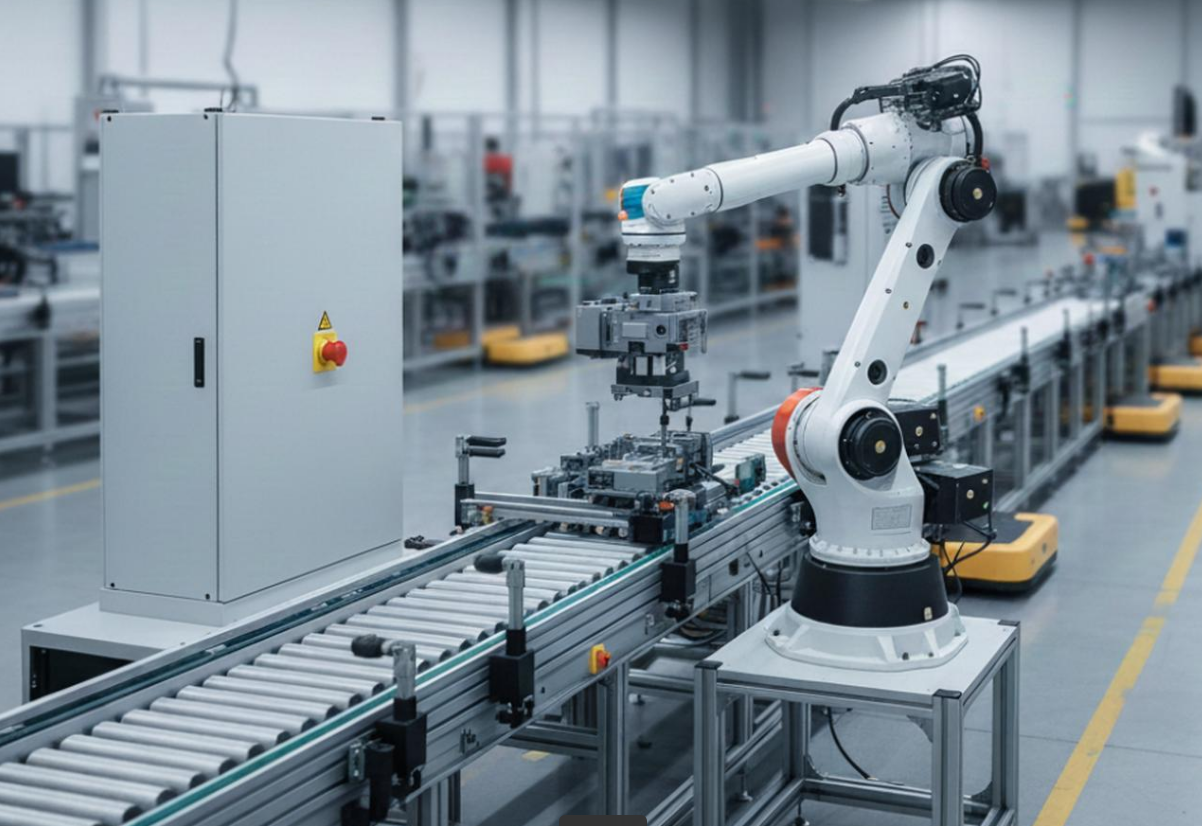
In a modern manufacturing plant, data flows simultaneously from machines, lines, warehouse, ERP system and analytical platforms - but only their integration into a coherent ecosystem translates into real OEE growth, less downtime and better profitability. SK Engineering operates precisely in this area: it designs and implements production automation and industrial systems integration solutions, combining the control, MES and ERP layers into one logical whole.
Why systems integration is key today
Industry 4.0 is based on three pillars: full digitization of processes, linking the OT world (automation, machines, lines) with IT (MES, ERP, analytics), and decision-making based on actual production data. Without systems integration, information remains "trapped" in individual islands - in PLCs, HMI screens, Excel sheets or local reports that are not visible from management and planning levels.
Effective integration makes it possible, among other things, to track order execution in real time, monitor OEE metrics, analyze causes of downtime and react quickly to deviations from the production plan.
Layers of systems in a modern plant
In a typical production environment, we can distinguish several key layers that need to be bundled into a single ecosystem:
- Field and control (OT) layer - sensors, actuators, drives, PLCs, DCS, HMI and SCADA systems responsible for direct process supervision.
- Manufacturing Execution Layer (MES/MOM) - Systems that manage order execution, production recording, quality, traceability and performance reporting.
- Business layer (ERP/APS/WMS). - Planning, logistics, inventory management and billing systems that determine what is to be produced, when and in what quantities.
- Analytics layer and IIoT - platforms that collect process, historical and business data, used for analytics, predictive maintenance or digital twins.
The ISA-95 standard organizes these levels, defining the model from physical process (level 0) to business planning (level 4) and describing what information should flow between each layer. This ensures that integration is not a collection of random interfaces, but a coherent architecture based on standardized data models.
Integration standards and technologies: OPC UA, MQTT, ISA-95
Successful integration projects today are based on open standards - they determine whether a system can be easily developed in the future without depending on a single vendor.
- ISA-95 / IEC 62264 - A standard describing the integration of business systems (ERP) with manufacturing systems (MES, SCADA), with ready-made data models for orders, resources, execution reports and plant hierarchy.
- ISA-88 - A batch process modeling (batch) standard that organizes equipment structure and production procedures based on recipes and modular plant design.
- OPC UA - a contemporary industrial communications standard that connects devices, SCADA, MES and analytics systems, offering a unified, semantic data model and built-in security mechanisms.
- MQTT + Unified Namespace (UNS). - a lightweight publish/subscribe protocol used for streaming data and events, especially in IIoT and cloud solutions, which, when combined with the UNS concept, allows you to build a central namespace for plant-wide data.
In practice, a hybrid is increasingly being used: OPC UA as the "semantic backbone" of data, and MQTT as an efficient event transport to IIoT brokers and platforms, including in the cloud. This approach is fully compatible with RAMI 4.0, where OPC UA is the recommended standard for the communication layer in the upper layers of the model.
How SK Engineering approaches systems integration
SK Engineering specializes in the design and implementation of complex solutions for industry - from line automation to industrial systems integration to dedicated applications and machinery. In one completed project, the company was responsible for integrating disparate equipment and systems into a cohesive Doypack packaging line, combining mechanical, automation and IT/OT integration aspects.
A typical integration project implemented by SK Engineering includes:
- Analysis of the current state - Inventorying existing systems (PLC, SCADA, MES, ERP), mapping information flows and identifying data gaps.
- Target architecture design - Design an integration model based on ISA-95/ISA-88 standards, using OPC UA and/or MQTT, depending on performance requirements and target analytics.
- Implementation and configuration - Implementation of OPC UA servers, MQTT brokers, connectors to MES/ERP, and configuration of the data modeling layer so that machine signals are linked to the business context (orders, batches, products).
- Testing, training and optimization - system startup, integration with existing IT/OT infrastructure, training of production and maintenance teams, and further tuning of metrics and reports.
As a result, the customer gets not just a working interface, but a complete, well-thought-out solution to support the Industry 4.0 strategy and the long-term development of the plant.
Examples of integration scenarios that we implement
Combining SCADA/PLC with MES
In many factories, machine data is only visible at the HMI or local SCADA level, making production reporting require manual transcription of information into higher-level systems. Integrating SCADA/PLC with MES using OPC UA allows machine states, production counters, alarms and downtimes to be automatically transmitted to production management systems.
The results include reliable OEE counting, better analysis of the causes of downtime, and the ability to optimize the order sequence based on the actual capabilities of the line, not just a theoretical plan.
Integration of MES with ERP and APS
The next step is to splice the execution layer (MES) with planning and logistics (ERP, APS) in an ISA-95-compliant model. Production orders, recipes and plans are automatically transferred from ERP to MES, and from MES comes back to ERP feedback on execution, materials used and quality parameters.
Such integration helps to improve the accuracy of procurement planning, shorten order processing cycles and better account for production costs - while maintaining a clear division of authority between systems.
Integration with IIoT platforms and data analytics
More and more plants want to use production data for advanced analytics, predictive maintenance or AI/ML projects - often using cloud solutions. OPC UA, complemented by MQTT and the Unified Namespace concept, enables secure and scalable sharing of process, historical and business data to such platforms.
This allows you to build real-time KPI dashboards, train predictive models using real line data, and implement digital process twins without having to write dedicated point-to-point integrations each time.
Security and reliability in an integrated environment
Expanding integration increases the potential attack surface, so projects must be designed with cyber security in mind from the start. OPC UA offers authentication, authorization and encryption mechanisms for communications, as well as granular address space assignment, making it easier to meet OT security standards.
At the same time, proper network segmentation, certificate management, traffic monitoring and securing MQTT brokers and interfaces to the cloud are crucial. SK Engineering designs integration architectures with these requirements in mind, so that connecting the OT/IT worlds does not come at the expense of security or line availability.
Systems integration with SK Engineering - what the plant gains
Working with an experienced industrial systems integrator, such as SK Engineering, allows you to translate Industry 4.0 concepts into concrete, measurable results on the shop floor. Based on open standards (ISA-95, ISA-88, OPC UA, MQTT), solutions are created that are tailored to the specifics of the line, the industry and the customer's business strategy.
For the investor, this means, among other things:
- better visibility into near real-time production processes,
- higher line availability and lower downtime costs,
- More accurate production planning and accounting,
- Lower vendor lock-in risk due to open standards and modular architecture,
- Preparing the plant for the next steps of digital transformation (IIoT, AI, digital twins).
If you want your facility to take the next step toward Industry 4.0 - from an audit of the current architecture, to an integration design, to implementation and maintenance - the SK Engineering team would be happy to help plan and execute this end-to-end process.